Ultimate list of eConsent Software Vendors – Summary
If you are involved in the management of clinical trials and are looking for a list of eConsent software vendors, then you are in the right place.
eConsent software is used to manage the informed consent of clinical trial participants. We showcase over 35 eConsent Software solutions. We will update the list from time to time.
Visit our full clinical trial solution directory listings for a detailed look at vendors who offer clinical trial solutions such as CTMS, EDC, eTMF, and more categories.
Table of Contents
No such thing as “Best” eConsent Software
There’s no single “best” eConsent software because clinical research and the needs of companies running clinical studies are too complex and specialized.
“Best” lists are more about clickbait to attract search engines and Ai discovery than comprehensive information. And we are certainly guilty of that as well.
However, we do not simply showcase a handful of eConsent and state they are the best or have paid sponsorships and claim they are the best. Instead, we work hard at providing an exhaustive eConsent vendors list so your team can evaluate their features and match them to your needs.
What is eConsent Software for Clinical Trials?
eConsent software is used to manage the informed consent process digitally in clinical trials. It allows participants to read, review, and sign consent forms on a device. The software includes videos, quizzes, and other tools to help patients understand the study before agreeing to take part. This improves participant clarity and helps ensure that consent is truly informed.
Clinical researchers use eConsent to track who has signed, when they signed, and whether they understood the key parts of the study. The system stores all records securely and keeps a clear audit trail. The reduction in paperwork supports faster startup times. eConsent software is widely used in both site-based and decentralized trials.
Top benefits of eConsent software
- Better patient understanding: Interactive content helps explain study details clearly.
- Faster enrollment: Patients can complete consent forms remotely and on their own schedule.
- Reduced errors: The software checks for missing signatures or unanswered questions.
- Secure recordkeeping: Digital signatures and audit trails improve data integrity.
- Easier tracking: Researchers can see consent status in real time for each participant.
- Supports remote trials: Patients do not need to visit a site to give consent.
- Improved compliance: Built-in checks help meet regulatory and ethical standards.
- Multilingual options: Consent forms can be shared in different languages to support diverse populations.
List of eConsent Software Solutions
For the sake of clarity, we have provided the list of eConsent Software solutions in alphabetical order and provided the description mostly found on the vendor’s website.
This is not a review of each vendor’s solution. It is simply showcasing available eConsent software solutions for your further review.
.
5th Port eConsent
5th Port eConsent delivers a fully documented digital process where participants ask questions, flag unclear sections, and sign electronically in a secure environment. Workflows support remote, in-office, or hybrid use to fit clinic operations and reduce pressure on patients and staff. Guidance is presented in the participant’s preferred language to explain protocols, risks, benefits, and alternatives, aiming to improve comprehension before signing. Materials are reviewed at home or on site, with interactive multimedia used to clarify complex topics. Coordinators track progress and manage follow up so reconsent and amendments are handled consistently. The approach focuses on clearer communication, shorter visits, and a consistent consent history that supports study execution across sites.
Advarra eConsent
Advarra eConsent emphasizes participant engagement, standardized eSignature workflows, and oversight for research sites and site networks. Participants choose their device, review intuitive templates, and complete signatures supported by audit trails, alerts, and analytics. Teams monitor consent activity in real time across studies and locations, including remote access for distributed teams. Integrations are highlighted, such as alignment with Advarra CIRBI to keep ICFs current and interfaces with OnCore and Clinical Conductor to streamline protocol data and operations. Reconsent is coordinated with version tracking and notifications so the correct form is presented at the right time. The goal is a smoother participant experience paired with centralized visibility and tighter operational control over consent documentation.
Castor eConsent
Castor eConsent is a modular toolset for recruitment, pre-screening, consent, and direct data capture across traditional, hybrid, or decentralized trials. A configurable recruitment portal and questionnaires support remote enrollment to expand access and diversity. After consent, participant data flows into Castor EDC to continue study activities without reentry. Secure video visits enable remote consenting with built-in signatures and questionnaires in one environment. Study teams gain real time visibility into enrollment progress so coordinators can proactively assist participants. By consolidating video, forms, and signatures, the workflow reduces application switching and keeps participants on a clear path from screening to enrollment while giving sponsors and sites consistent, trackable documentation across sites and studies.
Clincapture eConsent
ClinCapture eConsent provides a patient-friendly remote consent experience that automates enrollment and onboards participants directly into Captivate EDC. Consent tracking and versioning are built to reduce errors and lighten study and site workload. Integrations with Captivate EDC, Captivate Randomization, and eCOA/ePRO create a unified site experience from screening through data capture. Features include signature compliance checks, remote consent monitoring, and site screening metrics. Localization also supports multiple languages and regional requirements. Implementation timelines are positioned to move from months to weeks. The solution sits within the Captivate suite and Private Clinical Cloud, designed to deliver real time capture and insight while maintaining a single set of records across teams.
Clinical Research IO eConsent
Clinical Research IO eConsent manages informed consent within an integrated eSource and eConsent workflow for research sites. Teams configure, execute, and track electronic consents, with explicit controls to prevent missed re-consents. At each visit, the system checks the current ICF version and presents the correct form, reducing protocol deviations caused by outdated documents. Coordinators and investigators work in a single environment alongside scheduling and source, improving handoffs and audit readiness. Real time status views keep staff aligned on which participants are fully consented and which require follow up. The focus is on site-centric operations that maintain current versions, streamline documentation, and reduce avoidable errors across visits and amendments.
Clinevo eConsent
Clinevo eConsent is a mobile-friendly electronic consent system designed to keep participants engaged and improve consent quality. Multimedia options support different learning styles so complex procedures can be explained clearly. eConsent is part of a unified platform that can include EDC, IWRS, eCOA, CTMS, eTMF, and remote monitoring in one environment. Support for decentralized and hybrid studies is called out, with reminders and smartphone alerts that help participants stay on track. Simple design and guided steps aim to reduce confusion while giving coordinators visibility into progress. By pairing participant-oriented content with connected operations, Clinevo positions eConsent to streamline startup, reconsent, and ongoing documentation across sites and regions.
Clinvigilant eConsent
Clinvigilant eConsent replaces paper forms with digital documents to simplify distribution, storage, and version control across studies. Multimedia explanations clarify processes and risks, while interactive quizzes or Q&A help confirm participant understanding before signature. Electronic consent workflows support remote and decentralized trials, including notifications and reconsent when forms are updated. This helps participants receive the latest information. Coordinators see status at a glance and can resolve gaps quickly. The emphasis is on improving efficiency and accuracy for study teams. The system follows standardized steps that are easier to manage across sites, languages, and protocol changes throughout the study lifecycle.
Cloudbyz eConsent
Cloudbyz eConsent, built on Salesforce, delivers a template-driven, multimedia experience across mobile devices to move beyond static paper forms. Participants can highlight unclear text or ask questions via chat, and all conversations are retained for reference. The workflow supports reviewing materials on personal devices and completing consent at home or in clinic. Quizzes measure comprehension and analytics help refine questions over time. Study teams benefit from real time collaboration and visibility, while sponsors gain consistent presentation of information across sites. By unifying Q&A, media, and signatures in a single workflow, Cloudbyz aims to decrease drop-off, increase compliance, and give coordinators a clearer view of progress.
CRS Cube eConsent
CRScube cubeCONSENT is designed to increase engagement and streamline consenting by improving visibility of consent status and reducing enrollment delays. Interactive multimedia content runs on handheld devices, with on-screen signatures and automated site notifications to keep steps moving. Real time insights and version tracking help ensure the correct form is signed and that updates are applied consistently. Benefits include reduced paperwork, fewer manual tracking tasks, and faster enrollment. These are supported by robust data protections and a comprehensive audit trail. cubeCONSENT connects with adjacent clinical tools so sites and sponsors can maintain accurate, current documentation across programs and geographies.
Crucial Data Solutions eConsent
TrialKit eConsent allows participants to review and sign from any device, with educational hyperlinks, pop-ups, photos, and videos. Copies are distributed automatically after consenting or reconsenting so participants and sites retain complete records. Translations in many languages broaden access, and a handoff mode supports in-clinic completion with a clinician. By enabling consent virtually anywhere, the approach improves understanding, increases enrollment and retention, and keep studies moving smoothly. The experience is illustrated with participant-facing screens that show how materials are presented and acknowledged. eConsent sits within the broader TrialKit platform so teams align consent artifacts with downstream data collection and operational workflows.
Curebase eConsent
Curebase eConsent supports complex workflows by configuring steps at the site or subject level. They also accommodate participants, legally authorized representatives, witnesses, and pediatric needs. Compliant signature options are paired with controls over authentication methods based on user type. Remote consenting is supported alongside virtual onboarding into ePRO, with reported high on-time survey completion once participants transition. Teams can choose remote, hybrid, or on-site consenting and use in-app telemedicine for integrated remote discussions. Multimedia, progressive consent, and embedded attestations or data entry connect consent with the broader patient journey. The objective is to reduce drop-off while capturing a clear, complete record of decisions and acknowledgments across participants and sites.
Datacapt eConsent
Datacapt eConsent simplifies access to studies, improves understanding, and supports informed consent. This is done by aligning with international standards referenced on the page, including GDPR, FDA 21 CFR Part 11, and CPP. Multimedia allows participants to navigate at their own pace, and eIDAS-compliant signatures confirm identity, integrity, and traceability. An intuitive interface guides users step by step. Real time visibility across sites enables tracking and monitoring, while guided recruitment and sign-up improve engagement. Bring-your-own-device access supports participation anywhere, with the ability to ask questions and sign using multiple methods. The focus is a clear, verifiable process that supports participants and coordinators from first contact through signed consent.
Datacubed eConsent
Datacubed prioritizes comprehension and retention by presenting study information clearly and giving participants and caregivers time to digest materials. Dynamic content like text, videos, and quizzes, helps evaluate understanding before signature. An Insights Dashboard shows who received forms, who completed them, and who is delayed so staff can follow up with at-risk participants. Language is simplified and content is paced so participants review at their own speed. By connecting engagement tools with consent tracking, teams gain measurable visibility into bottlenecks and intervene earlier. The aim is to reduce early attrition driven by confusing documents and ensure that both participants and legally authorized representatives understand what they are agreeing to before enrollment proceeds.
Delve Health eConsent
Delve eConsent benefits include faster startup via automation, reduction in consent errors, remote monitoring, and an improved patient experience. Security features include facial recognition. Comprehension is improved through web based video calls, interactive content, multimedia and links to FAQs. Participation from any location is supported so patients review and sign without traveling to a site. The approach emphasizes simple, easy-to-understand information designed to increase engagement and retention. Delve Health also provides coordinators tools to confirm that participants have seen and acknowledged the correct information at each step.
dfNet eConsent
dfconsent focuses on participant comprehension and operational control. Interactive multimedia in local languages supports quick consent from phones, and linked text helps explain key topics in context. Re-consent is simplified with strict version control and electronic updates, reducing risks associated with outdated or mishandled documents. Configurable review and approval workflows serve sponsors, site managers, IRBs and ethics committees. Participants can interact with site personnel during review, improving clarity and comfort before signature. The design emphasizes visibility and easy access to current digital forms so participants show they have received and acknowledged the latest information across studies and sites.
DSG eCaseLink eConsent
DSG eCaseLink eConsent can run standalone or with the eCaseLink EDC platform. A secure, responsive interface supports on-site or off-site capture on smartphones, tablets, laptops, and desktops. Participant signatures record time and date, and investigator signatures are captured to complete the process. Multimedia information delivery sits alongside telehealth support, real time data collection, built-in eSignature, and remote monitoring. Interactive videos or validated assessment tools can be used where appropriate. Flexibility is emphasized so consenting can occur in operating rooms, clinics, offices, or fully remote settings. The overall intent is to improve participant understanding and convenience while giving coordinators consistent records they can track and verify across locations and studies.
eClinPro eConsent
eClinPro highlights three core benefits. First, better participant understanding driven by interactive tools such as videos, quizzes, and digital materials that explain study information clearly. Second, a streamlined process that removes paper, enabling electronic review and signature while reducing administrative steps for site staff. Third, real time tracking of consent status so coordinators can confirm participants are properly consented and avoid delays in starting or continuing study procedures. The product is part of a broader SaaS workflow that also includes CTMS, eSource, and eDocs, allowing teams to keep related activities in one environment. The intent is to pair clear education with predictable, trackable steps that support consistent documentation across studies.
Evident IQ eConsent
Evident IQ eConsent delivers a fully electronic process that can include images, audio, video, diagrams, reports, and digital signatures. Electronic formats are presented as aiding comprehension versus handwritten forms that might abbreviate or omit important points. Recruitment portals, pre-screening questionnaires, and collection of eligibility status with timestamps can be connected so the next steps begin as soon as consent is captured. Design options include embedded video, graphics, and PDFs along with acknowledgement checks to confirm participants reviewed key information. After consent, data can be updated to EDC so teams proceed without reentry. The focus is a participant-friendly experience paired with a smooth handoff into downstream study activities and ongoing documentation control.
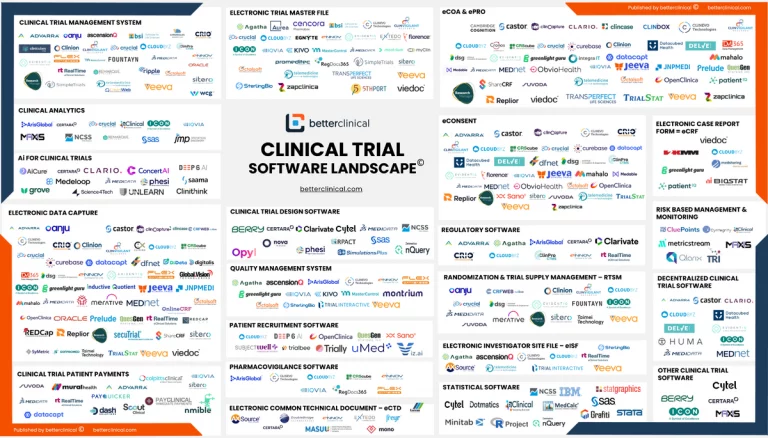
The Clinical Trial Software Landscape
Review a comprehensive look at the clinical trial software vendor ecosystem, in infographic format
Florence eConsent
Florence eConsent operates within a site enablement platform that connects consent with document management and team coordination. Invitations can be issued to participants, status is tracked in real time, and predefined staff permissions keep responsibilities clear. Reconsent after protocol amendments is coordinated so participants receive the updated form. Participant identity verification is supported, and a single participant login can be used across all active studies managed in the environment. By tying consent to related site workflows, teams streamline activation and ongoing document handling, maintain current versions, and reduce back-and-forth between systems. The structure aims to give coordinators straightforward steps for inviting, tracking, and completing consent while keeping records aligned across studies.
IQVIA eConsent
IQVIA eConsent addresses large programs with configurable workflows and broad interoperability. Multimedia explanations, comprehension steps, and identity verification support remote or on-site processes, with investigator countersignatures where required. Versioned documents and audit history pair with dashboards that show status by site, region, and study. Reconsent is coordinated after amendments so participants sign the correct form. Integration with IQVIA technology and connections to external platforms are emphasized to reduce manual reconciliation. Reporting and exports give sponsors and CROs oversight across portfolios. The approach centers on standardized processes that scale globally while maintaining a participant-friendly experience and consistent documentation from screening through enrollment and subsequent protocol changes.
Jeeva eConsent
Jeeva eConsent supports decentralized and hybrid trials with multimedia explanations, comprehension checks, and electronic signatures that can include identity verification. Version-controlled templates and investigator countersignatures help maintain a complete record. Reconsent can be issued centrally and tracked with dashboards that show site-level status in real time. eConsent works within the Jeeva platform and connects with external study systems to minimize duplicate entry. Reporting and exports assist with monitoring and documentation quality. The design focuses on a clear participant experience that guides individuals through each step while giving coordinators predictable workflows for invitation, review, signature, and follow up across multiple studies and locations.
Mahalo eConsent
Mahalo eConsent concentrates on participant guidance and consistent documentation for decentralized and site-based studies. Multimedia content and comprehension steps help explain procedures before electronic signatures are captured remotely or in clinic. Version history and role-based permissions keep responsibilities and updates clear. Coordinators track status on dashboards and manage reconsent during protocol changes so the correct forms are used at the right time. Connections with Mahalo modules and common clinical systems are described to reduce duplicate work and keep records synchronized. The structure aims to deliver predictable workflows for study teams while helping participants understand study activities and their choices throughout screening, enrollment, and subsequent amendments.
Medable eConsent
Medable eConsent serves decentralized and hybrid trials with multimedia education, comprehension checks, and electronic signatures that can include identity verification. Version control and dashboards provide visibility by site and study, and reconsent is coordinated during protocol amendments. Interoperability within the Medable DCT suite and connectors to external systems enable a unified flow from consent through ongoing data collection. Reporting and exports support oversight and documentation quality. The emphasis is on a participant-friendly experience supported by standardized, repeatable steps so global programs can maintain consistent records and progress from invitation to enrollment without juggling multiple tools or duplicating information across systems and teams.
Medidata eConsent
Medidata eConsent runs within the Medidata Platform and connects to Rave-based data capture. Multimedia explanations, comprehension checks, identity verification, and investigator countersignatures support remote or onsite workflows. Version control and audit history are paired with dashboards that show site-level progress and documentation completeness. Reconsent is coordinated when protocols change so participants sign the correct version. Interoperability with Medidata Rave and related modules reduces reentry and keeps records aligned as participants move from screening to study procedures. Sponsors and CROs gain consistent processes across sites and regions while giving participants a clear path through review and signature with media designed to make complex topics easier to understand.
Mednet eConsent
Mednet eConsent adds electronic consent to the Mednet clinical data platform. Multimedia content and comprehension steps support participant understanding, with signatures captured remotely or on site. Version control and audit history maintain a clean record of what was presented and signed. Dashboards display status by site and study, and reconsent can be coordinated following protocol amendments. Integration with Mednet EDC and related modules limits duplicate entry and helps keep consent artifacts synchronized with operational data. Reporting and exports provide oversight so teams can confirm documentation completeness. The structure is intended for organizations standardizing on Mednet who need consistent, trackable consent processes across studies and locations.
Obvio Health eConsent
Obvio Health eConsent supports remote and hybrid trials with multimedia explanations, comprehension checks, and electronic signatures captured during telehealth sessions or asynchronously. Identity verification and investigator countersignatures can be included where required. Versioned forms, role-based permissions, and audit history provide a traceable record across sites and studies. Dashboards offer real time visibility into enrollment and documentation so coordinators can follow up promptly. eConsent operates within the Obvio Health platform and connects with external systems to minimize duplicate work. The approach enables decentralized processes while maintaining clarity for participants and consistent records for study teams from initial contact through final signature and subsequent reconsent events.
Octalsoft eConsent
Octalsoft eConsent provides multimedia content, comprehension steps, and identity verification with investigator countersignature to complete the record. Version control and audit history are included so updates and signatures are tracked accurately. Coordinators monitor status on centralized dashboards and manage reconsent during protocol amendments. eConsent integrates with Octalsoft EDC and can connect to other study systems to reduce duplicate entry and reconcile records. Reporting and exports support monitoring and documentation quality. By aligning participant-oriented materials with site and sponsor workflows, Octalsoft focuses on clear explanation, predictable steps, and easier management of consent documentation across multi-site programs and evolving study requirements.
OpenClinica eConsent
OpenClinica eConsent brings multimedia education, comprehension checks, and electronic signatures into the OpenClinica ecosystem. Identity verification can be included where needed. Version control, role-based permissions, and audit history maintain completeness and traceability. Reconsent is issued across amendments and tracked by site and study on real time dashboards. Integration with OpenClinica EDC reduces reentry and keeps consent artifacts aligned with clinical data as participants continue in the study. Reports and exports support oversight. The combination aims to improve documentation quality and enrollment efficiency for teams that standardize on OpenClinica for data capture and want consent processes closely connected to operational workflows across locations and studies.
Replior eConsent
Replior eConsent supports global programs that require consistent processes across languages and regions. Multimedia guidance and comprehension steps prepare participants for signature, which can occur remotely or at the site, with investigator countersignature added where applicable. Versioned templates, role-based permissions, and audit history ensure each step is recorded. Reconsent is coordinated centrally when protocols change, and dashboards show site-level status in real time. eConsent works with Replior modules and connects to common EDC and CTMS to minimize duplicate entry. Reporting and exports support oversight. The design balances participant clarity with operational consistency so distributed teams maintain up-to-date documentation through enrollment and subsequent updates.
Research Manager eConsent
Research Manager eConsent delivers standardized, trackable consent within the ResearchManager suite. Multimedia information, comprehension steps, and electronic signatures support remote or onsite workflows. Version control, role-based permissions, and audit history maintain a clear record of what was presented and signed. Reconsent is managed during protocol changes and tracked across sites using dashboards. eConsent interoperates with the broader ResearchManager platform and connects with external EDC or CTMS to reduce duplicate entry. Reporting and exports provide oversight so sponsors, CROs, and sites can verify documentation completeness while maintaining predictable, repeatable steps for coordinators and investigators across distributed teams and studies.
Sano Genetics eConsent
Sano Genetics eConsent is used in studies that include genomic research as well as broader clinical workflows. Multimedia education and comprehension steps help participants understand sensitive topics before signing electronically. Version history, role-based permissions, and audit trails provide traceability across sites and studies. Dashboards present real time status, and reconsent is coordinated centrally during protocol changes. eConsent integrates with Sano Genetics engagement tools and connects with external systems to minimize manual reconciliation. The objective is to deliver a participant journey that balances clarity and privacy with operational needs, supporting decentralized and traditional designs while maintaining current documentation as studies evolve.
Sitero MENTOR eConsent
Sitero MENTOR eConsent sits alongside site enablement capabilities to provide multimedia information, comprehension steps, and electronic signatures with optional identity verification. Teams manage versioned templates, capture investigator countersignatures, and maintain audit history for a traceable record. Reconsent tasks can be distributed centrally, and real time dashboards reveal site-level progress so coordinators can follow up quickly. Interoperability with Sitero modules and connections to external clinical systems reduce duplicate work. Reporting and exports support oversight and documentation quality. The workflow focuses on giving coordinators clear steps and participants a straightforward experience across decentralized and traditional trials with multiple sites and evolving protocols.
Suvoda eConsent
Suvoda eConsent forms part of a wider clinical technology suite. Multimedia information and comprehension prompts help prepare participants for signature, which can include identity verification. Version control and audit history maintain accuracy as documents evolve. Teams coordinate reconsent and track status across studies and regions through dashboards. eConsent integrates with other Suvoda applications and connects to EDC and CTMS to reduce manual reconciliation and keep records aligned. Reporting and exports support oversight. The aim is to standardize processes for decentralized and traditional designs while offering a participant-friendly experience and consistent documentation across multiple sites and geographies as programs scale.
Telemedicine eConsent
Telemedicine eConsent enables remote consent discussions supported by video. Participants review materials, complete comprehension steps, and sign electronically during telehealth visits or asynchronously. Identity verification and investigator countersignatures can be included as needed. Version history, role-based permissions, and audit trails are part of the workflow so each step is recorded. Coordinators manage reconsent and monitor status across studies with dashboards that show real time progress. Interoperability with virtual visit tools and study systems reduces duplicate entry and keeps records synchronized. The approach provides a structured way to conduct consent for off-site participants while maintaining clarity, traceability, and coordination across decentralized trial models.
Trialstat eConsent
Trialstat eConsent offers configurable workflows that support witnesses, assent, re-consent, and revocation of consent. It is integrated with Trialstat EDC but can also be used with other EDC platforms. Intuitive digital steps, real time tracking, and integration are presented to increase engagement and compliance while reducing administrative burden. Enrollment is accelerated by guiding participants through media-rich explanations and clear signature paths. Screens illustrate participant and coordinator views. The design focuses on protocol compliance and visibility across sites, giving teams a consistent way to capture and verify consent while aligning documents with downstream data collection and operational activities throughout the study lifecycle.
Veeva eConsent
Veeva eConsent supports in-person and remote consenting with an emphasis on efficiency, documentation quality, and participant experience. Validation by Veeva and support for listed privacy and security obligations are stated. The workflow removes paper handling, simplifies screening, and works with SiteVault so sites manage documentation in one place. Features include tracking consent versions, reducing errors related to signature date and time, automatically generating screening logs, flexible consent on any device, and storing signed ICF copies in the participant app. Collaboration between sponsors and sites is highlighted so both parties see progress and confirm completeness, helping keep activation and enrollment on track across studies and locations.
Zapclinica eConsent
Zapclinica eConsent standardizes consent across studies with multimedia information, comprehension prompts, and electronic signatures captured remotely or in clinic. Investigator countersignature and identity verification options can be included. Version management, role-based permissions, and audit history keep a traceable record of changes and signatures. Coordinators manage reconsent and monitor status on dashboards so gaps are identified early. Connections to study systems and other Zapclinica modules limit duplicate entry and keep records aligned. The emphasis is on participant understanding, consistent documentation, and simpler coordination across sites so study teams can invite, track, and complete consent while maintaining current forms as protocols evolve.
The Clinical Trial Software Landscape
We built the clinical trial software landscape and directory listings to help with category classification and vendor selection. Hopefully these tools allow sponsors, CROs, and technology leaders to explore the full landscape systematically without implying rankings or endorsements.
betterclinical showcases over 400 clinical trial software
-For an infographic of all these software solutions, have a look at the Clinical Trial Software Landscape.
-For further insight & resources on the Clinical Trial Software Industry, visit our Content Library.